
What This Nobel Prize Discovery Means for the Future of Medicine
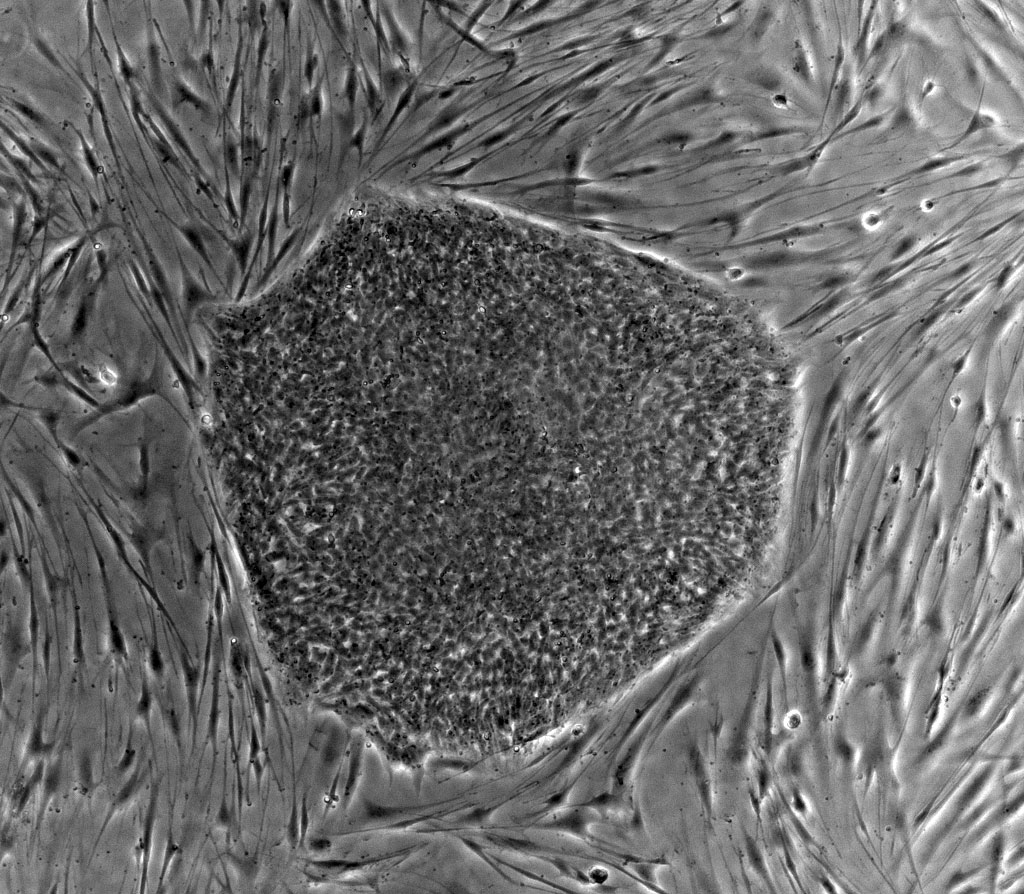
(cover image: Human embryonic stem cell colony on mouse embryonic fibroblast feeder layer)
You know those moments in science where someone just changes the game? Like when Watson and Crick cracked the structure of DNA, or when someone figured out how to make Wi-Fi super fast (I mean, almost). Well, Shinya Yamanaka had one of those moments in 2006 with his paper titled “Induction of Pluripotent Stem Cells from Mouse Embryonic and Adult Fibroblast Cultures by Defined Factors.” [later won the Nobel Prize in 2012
I had the pleasure of presenting this particular paper in my graduate course, Stem Cells and Molecular Medicine. It wasn’t just an assignment, it was a long journey to the possibilities that this discovery opened up. So, let’s talk about why Yamanaka’s work wasn’t just another paper but a call to rethink how we approach regenerative medicine, ethics, and the future of disease treatment.
So, What’s the Big Deal Here?
Yamanaka didn’t just push the boundaries of science; he levelled them. With a cocktail of four genes (Oct3/4, Sox2, Klf4, and c-Myc) he figured out how to revert adult cells back to a pluripotent state. This is the cellular equivalent of turning back time!
Why does this matter? For starters, it takes the controversial aspect of embryonic stem cells off the table. The promise of stem cell therapies (like regenerating damaged heart tissue or creating neurons for neurological disorders) no longer comes with the ethical baggage of using embryonic cells. That’s a big win for science and humanity.
What Does This Mean for Medicine?
Now, this is where it gets interesting. If you think about it, Yamanaka didn’t just give us a new tool; he gave us a new philosophy of medicine; one where the potential for personalization is immense. Imagine being able to create stem cells specific to each patient, tailor treatments without fear of rejection, or even model diseases in a dish to study them more closely. Sounds like science fiction? Well, thanks to Yamanaka, it’s moving closer to reality.

My Take? Yamanaka’s work wasn’t just about making cells pluripotent; it was about opening the door to a new age of precision medicine. The idea that we could use a patient’s own cells to treat their disease isn’t just a technical breakthrough, it’s a reimagining of the entire healthcare model. We’re talking about moving from a “one-size-fits-all” approach to a “custom-made” one.
But It’s Not All Smooth Sailing…
While Yamanaka’s paper makes it sound like we’re just four genes away from curing everything, reality is a bit more… messy. Yes, iPSCs are groundbreaking, but they also come with challenges. Reprogramming cells can sometimes lead to unexpected mutations, and the use of the gene c-Myc, a known oncogene (literally, a ‘tumor gene’) raises eyebrows about potential cancer risks. It’s like getting a superpower with a potential dark side for evil.
And then there’s the question of scalability. How do we turn this elegant lab discovery into practical, widespread treatments that don’t break the bank? That’s a billion-dollar question (quite literally).
Where Do We Go from Here?
What I find most fascinating is the direction this work is taking us. We’ve gone from thinking about curing diseases to actually engineering solutions at a cellular level. There’s a lot of hype around “personalized medicine,” but Yamanaka’s discovery is one of those rare moments where the hype is well-deserved. It’s not just about treating symptoms anymore; it’s about rewiring the body’s toolkit to fight back against diseases.
My Insight: The Future is About Collaboration
What I took away from presenting Yamanaka’s work is that we’re standing at the intersection of biology, technology, ethics, and even economics. The future of medicine isn’t just in the hands of biologists and doctors! It’s going to need ethicists, computer scientists, policy makers, and, yes, some courageous investors willing to bet on the next big thing.
So, while Yamanaka gave us the cellular rewind button, it’s up to us to figure out how best to use it. And that, my friends, is where things get really exciting.
(PS: Dear nerds, here is the link to the paper: https://pubmed.ncbi.nlm.nih.gov/16904174/)
Leave a Reply