
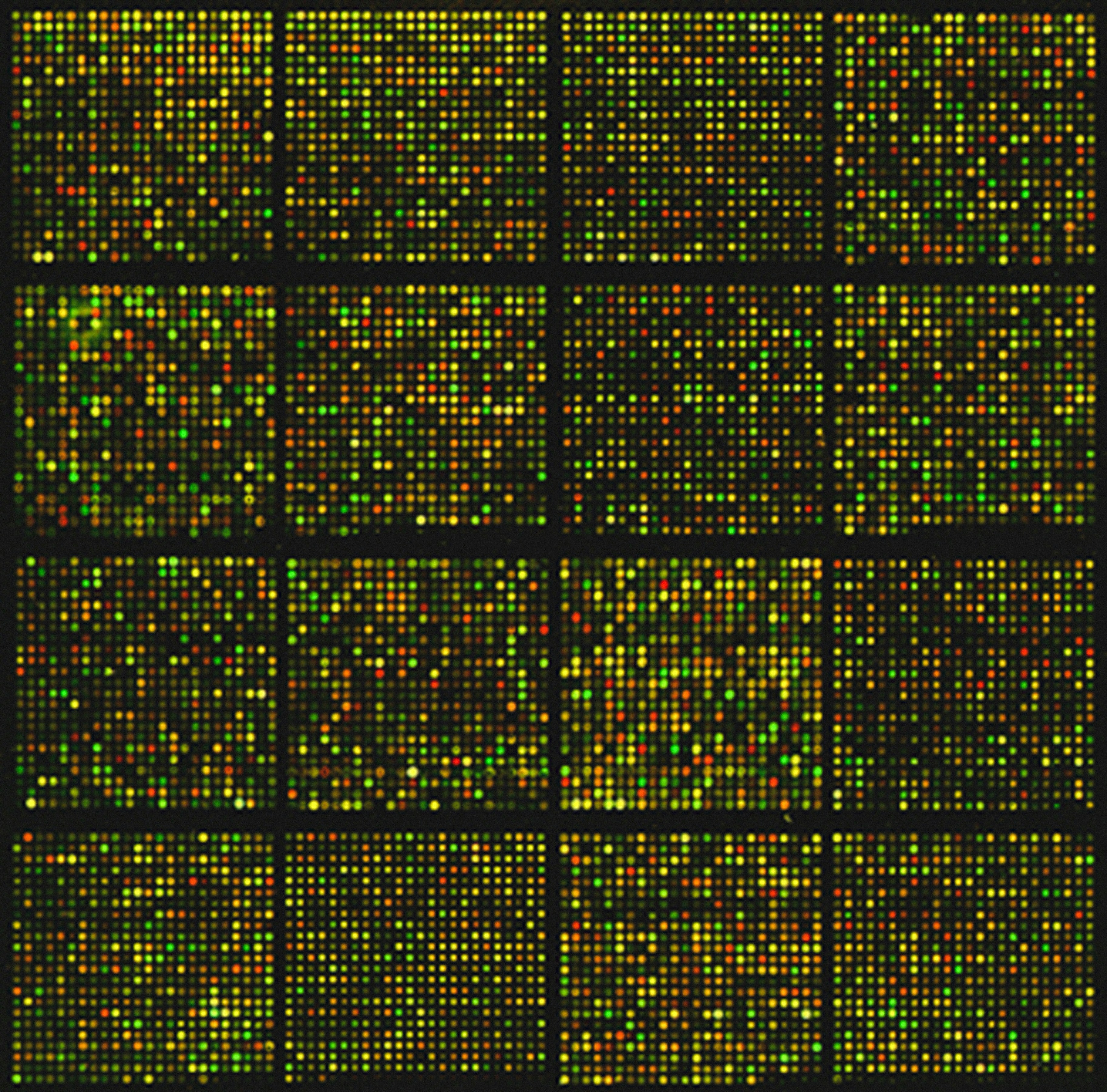
(cover: A mouse cDNA microarray containing approximately 8,700 gene sequences. The microarray reflects the gene expression differences between two different mouse tissues. By National Cancer Institute, Unsplash)
In the early days of medicine, treatments were guided by a handful of basic principles and a limited understanding of the human body. Physicians might have relied on rudimentary tools like bloodletting or herbal tinctures; all patients with similar symptoms were often given the same remedy, regardless of underlying differences. Over time, however, the medical community began to realize that individual factors—such as family history, lifestyle, and even subtle genetic variations—could profoundly influence the course of disease and the effectiveness of a given treatment. Despite the fact that this is largely how medicine is practiced today, this growing awareness paved the way for what we now call precision medicine.
A paradigm that breaks from the “one-size-fits-all” approach and tailors prevention, diagnosis, and therapy to the unique biological profile of each patient. By leveraging sophisticated genetic testing, advanced imaging, and powerful computational tools, today’s clinicians can step back from broad, generalized protocols and move toward personalized strategies that aim to improve outcomes, reduce side effects, and shape the future of healthcare itself.
What Exactly is Precision Medicine?
Precision medicine, or personalized medicine, is like customizing a suit, but for your health. It’s all about using genetic, environmental, and lifestyle information to understand what makes a patient tick, or, in some cases, what makes them sick. Rather than taking a trial-and-error approach, this strategy zeroes in on the underlying cause of a condition at the molecular level. Whether it’s picking the most effective drug with the least side effects or developing a brand-new therapy just for you, precision medicine aims to hit the bullseye every time.
How Does Precision Medicine Work?
The process involves some serious detective work to figure out what’s going wrong at the cellular level. Here’s the breakdown:
1. Genetic Analysis: This is like running a comprehensive background check on your DNA. Genetic sequencing identifies mutations or abnormalities that might be causing trouble.
2. Targeted Therapy Development: Once the genetic “culprits” are identified, the next step is designing or selecting therapies that specifically target these mutations.
3. Customized Treatment Plans: Armed with this precise data, healthcare providers create a treatment plan tailored just for you. The result? Higher chances of success, fewer side effects, and a treatment plan that feels less like a guessing game and more like a calculated strategy.

Why is Precision Medicine a Big Deal?
Imagine being able to predict and prevent a heart attack before it even happens, or finding the exact medication that works best for your type of cancer without going through months of trial and error.
Take oncology, for example. Instead of the traditional “chemotherapy for everyone” approach, precision medicine uses genetic insights to match patients with treatments that are more likely to work for their specific cancer type. The impact? Better outcomes, fewer side effects, and faster recoveries.
The Realities and Roadblocks
Of course, every superhero has a weakness, and precision medicine is no exception. One of the biggest hurdles? Cost. Developing treatments tailored for just one person, what scientists like to call “N-of-1” trials, is mind-blowingly expensive. We’re talking millions of dollars for a single course of treatment. And guess what? Insurance companies aren’t exactly rushing to cover these cutting-edge therapies.
Then there’s the issue of scalability. While creating a one-off therapy like milasen for Mila Makovec—a young girl with a rare condition called Batten disease—is a marvel of modern medicine, replicating that for thousands of patients is a different ball game altogether. Mila’s story is a beacon of what’s possible, but it also shows us how much more needs to be done to make these therapies accessible.
The Ethical Dilemma: Who Gets Access?
When treatments cost millions and are designed for a single patient, who gets access? Precision medicine brings up some heavy ethical questions about fairness and accessibility. Will these treatments be limited to those who can afford them or have access to top-tier medical centers? Or will we find a way to democratize this technology so that everyone benefits?
The Future: More Collaboration, Less Fragmentation
The future of precision medicine looks bright but also requires a roadmap that includes collaboration across the board—think medical centers, biotech firms, insurance companies, and, yes, even government regulators. If we’re going to make these custom-made miracles more routine, we need to rethink how we approach research, funding, and healthcare delivery.
Researchers are already looking at ways to bring down costs, like using AI to predict the most effective genetic targets or employing more scalable manufacturing processes for personalized drugs. With advancements in CRISPR, gene editing, and machine learning, the horizon is filled with promise.
The Bottom Line: A New Era is Knocking
Precision medicine isn’t just another buzzword in the healthcare world (we are seeing many today), it’s a new frontier.
Sure, there are challenges—steep costs, regulatory hurdles, and ethical questions—but the potential benefits are transformative. Imagine a future where your treatment plan is as unique as your fingerprint. That’s the kind of healthcare revolution worth investing in!
And it’s not just about treating the untreatable; it’s about offering hope where there was none. Because in the world of precision medicine, one size never fits all.
You can read more here.
Leave a Reply